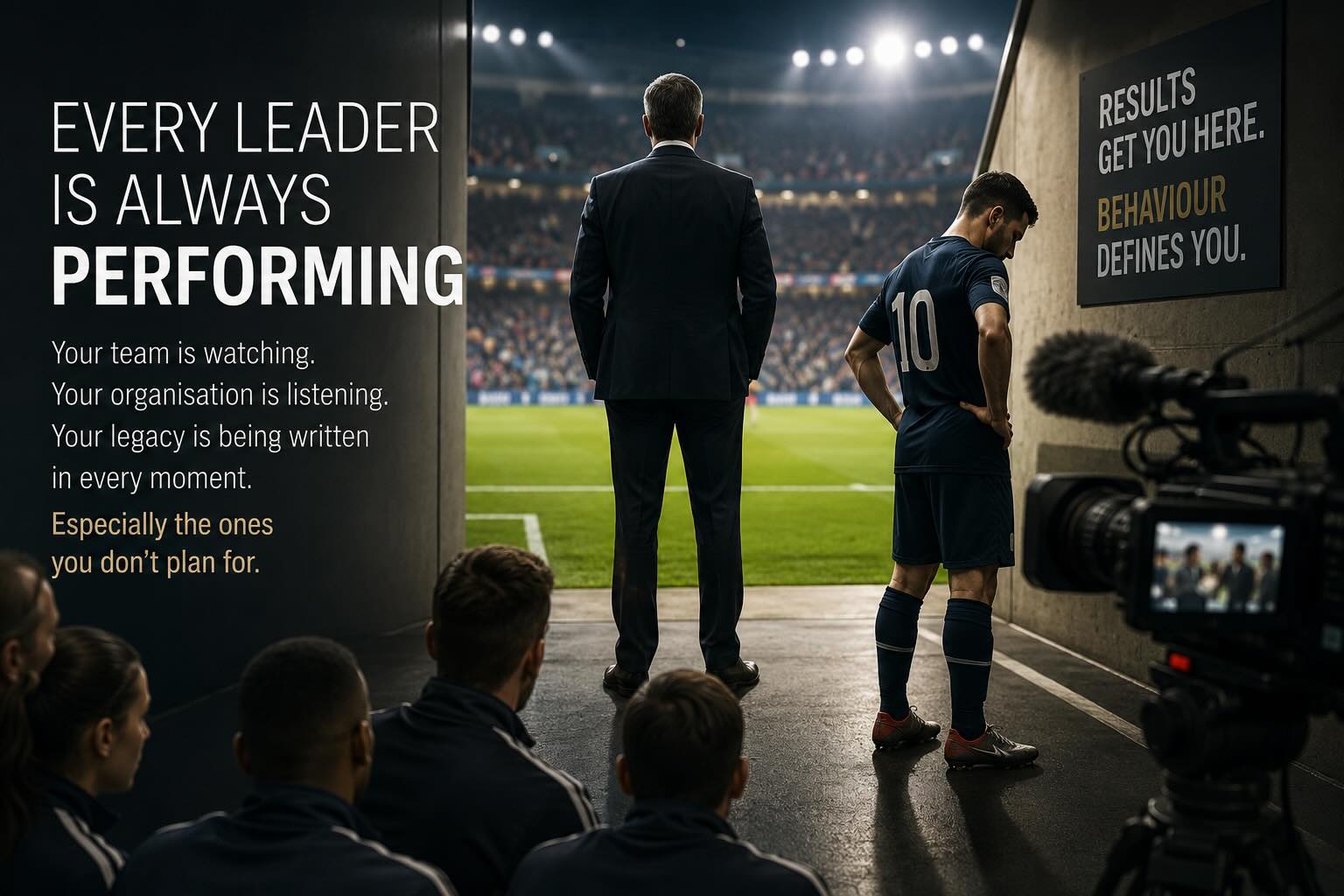
The Final Whistle: Every Leader Is Always Performing
Like millions of people around the world, I found myself watching the World Cup Final this weekend. And since I live in Spain, of course my eyes were glued to the TV.
The football was captivating. The tension, the skill, the emotion—it was everything a World Cup final should be.
But what stayed with me wasn’t the winning goal.
It was what happened after the final whistle.
As the celebrations began, the world watched not only the champions, but also those processing disappointment. Cameras lingered on faces, gestures, conversations and reactions. Within minutes, social media wasn’t just talking about the quality of the football—it was discussing behaviour.
And that made me think.
Leaders are no different.
The difference is that most executives don’t have television cameras following them around. Instead, they have something far more influential: people who are always watching.
Your team watches how you respond when a client chooses a competitor.
They watch how you react when a project fails.
They notice what you say when someone challenges your ideas.
They remember how you treat colleagues who disagree with you.
And perhaps most importantly, they observe how you behave when things don’t go your way.
In executive coaching, we often talk about “executive presence”. Many assume this is about confidence, communication or charisma. While those qualities matter, I believe executive presence is revealed most clearly in moments of adversity.
Success is easy to manage.
Anyone can appear composed when targets are exceeded, promotions are secured and praise is flowing.
The real test comes when expectations are not met.
When the deal falls through.
When the board asks difficult questions.
When a competitor wins.
These are the moments that define a leader’s reputation far more than any carefully rehearsed presentation ever could.
People don’t simply evaluate our competence. They evaluate our character.
The World Cup reminded me of something we often forget in business.
The final whistle is not the end of the performance.
In many ways, it is when the most important part begins.
Because long after people forget the score, they remember how those involved carried themselves when the outcome was no longer in their control.
How do you show up when the pressure is on?
If you’re ready to lead with greater confidence, composure and impact, let’s talk