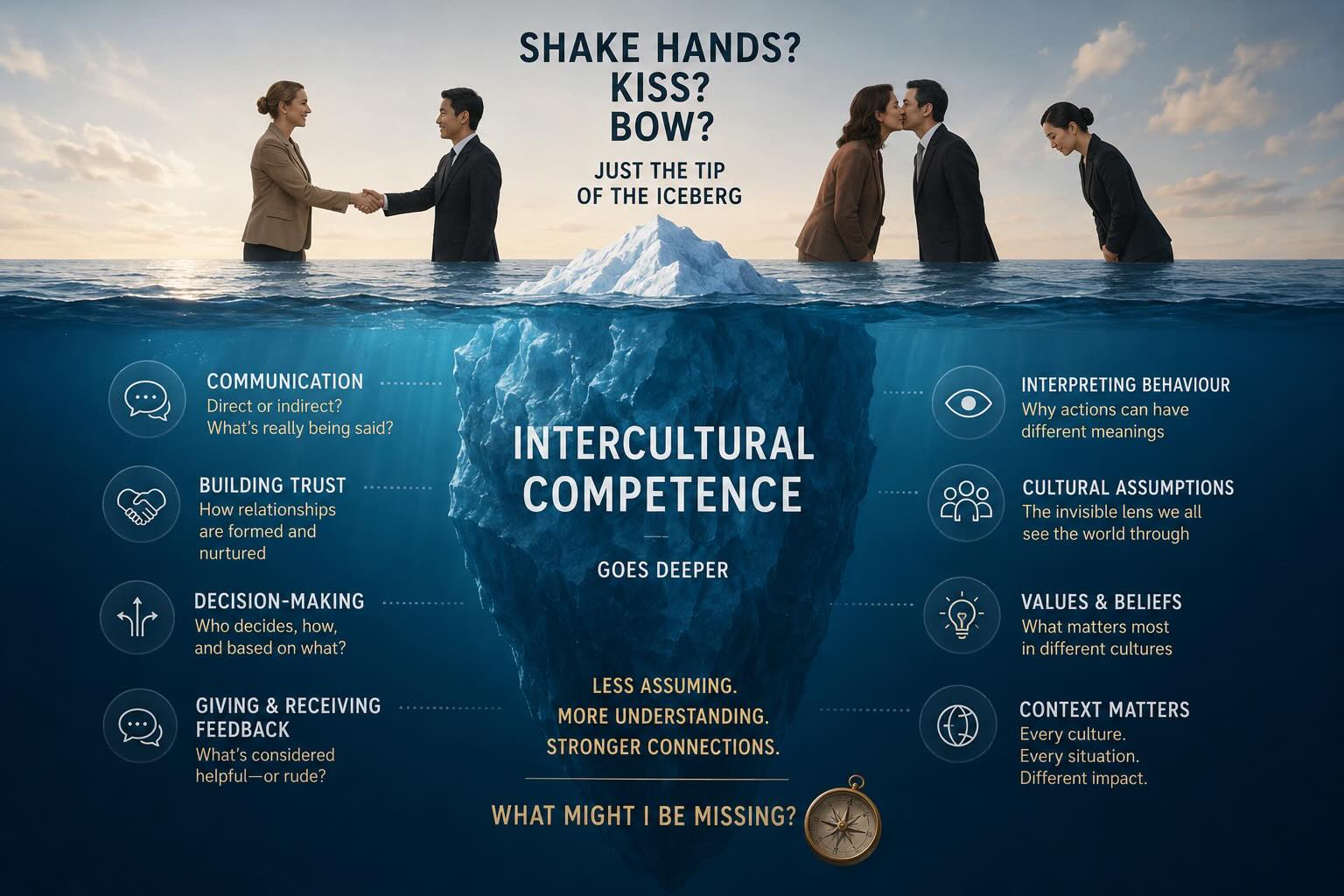
It is a bit more than kissing, shaking hands, and bowing.
I recently suggested intercultural training to a client who was struggling with her global partners. There was lots of miscommunication, incorrect interpretations, and frustration on all sides.
Her response stopped me in my tracks:
“Yes, I need intercultural training because when I fly to see my global colleagues, I need to know if I shake their hand or kiss them.” 💋
My response? ( deep breath in)
🗣 The knowledge of whether to shake hands or kiss someone is just the tip of the iceberg.
Intercultural competence isn’t about memorising etiquette. It’s about understanding the deeper cultural assumptions that influence how people communicate, build trust, make decisions, give feedback, and interpret behaviour.
Most cross-cultural challenges don’t arise because people speak different languages. They arise because people attach different meanings to the same words, actions, and situations.
And that’s where misunderstandings begin.
The journey toward intercultural understanding starts with a simple question:
What might I be missing?